
Tool manuals. Presses
Hello everyone! We continue to translate manuals for lampwork tools. Today it’s the press’s turn.
Presses will be useful if you want to make a large, even bead or pendant. They are also perfect for making jewelry of complex shapes and with convex patterns. You can find presses in our store by: link.
Начнем!
We warm up the separator. We collect a drop of glass and distribute it onto the mandrels, forming a long cylinder. We try it on to the shape of the press (Fig. 1).
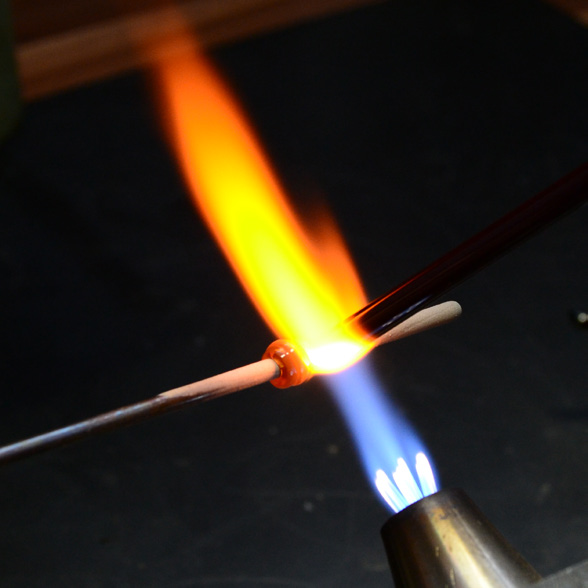
Fig.1
The size of the bead should be slightly smaller than the diameter of the mold. For flatter shapes, increase the distance from the edges of the shape (Fig. 2-3).
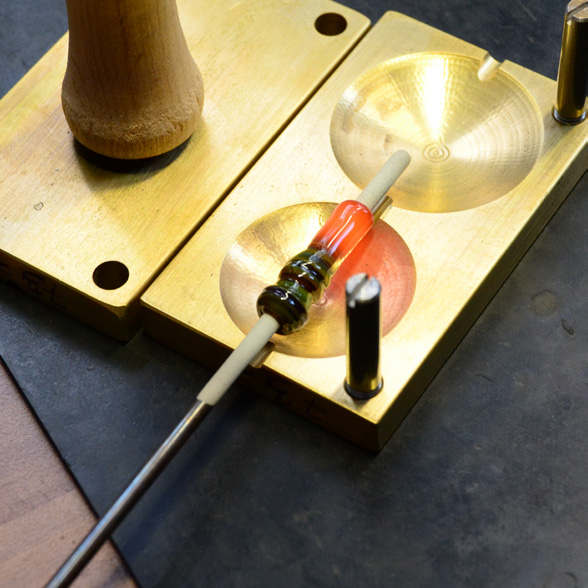
Rice. 2
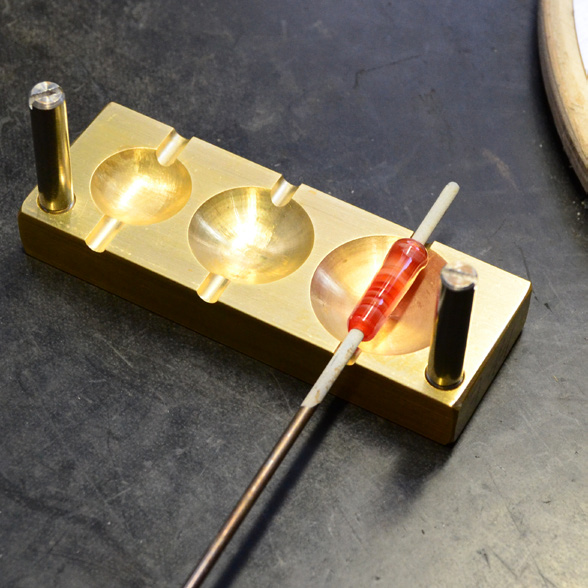
Rice. 3
Add glass to the cylindrical bead until you get the shape of an olive. For a deeper press, add more glass, almost to the shape of a ball (Fig. 4).
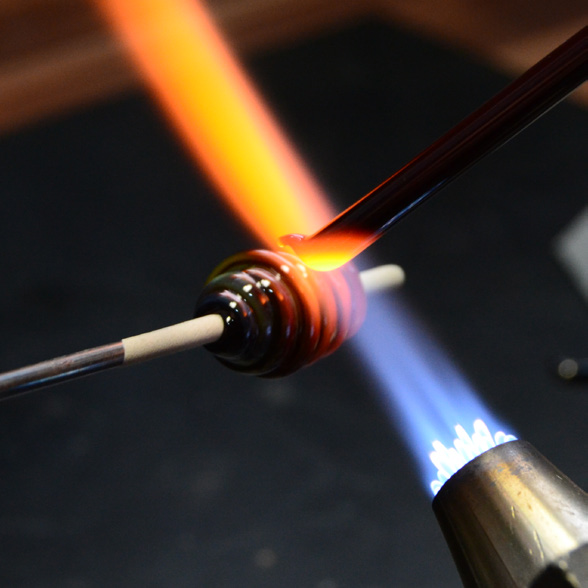
Rice. 4
Heat the bead until soft and place it in the lower part of the press. Align the parts of the press. Slowly connect, giving the bead its shape (Fig. 5-6).
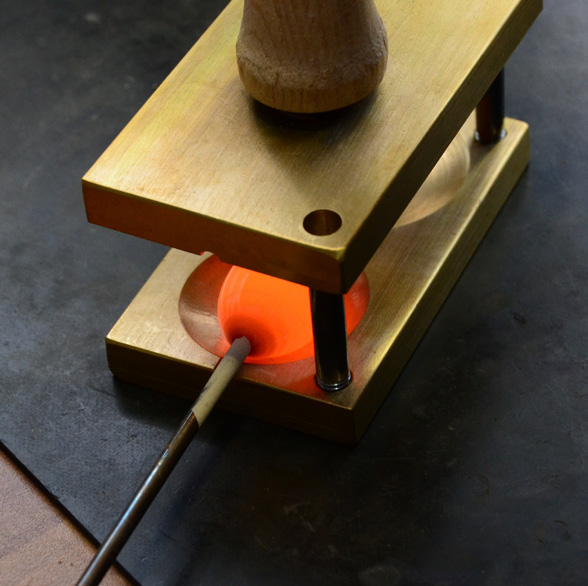
Rice. 5
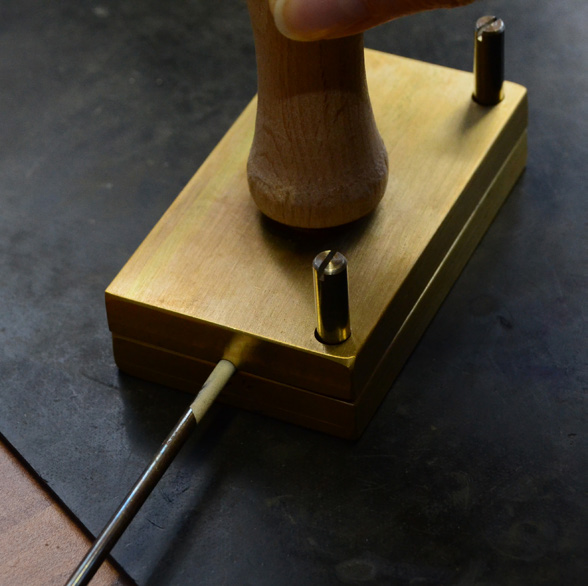
Rice. 6
Gradually add glass to the bead and press again until the optimal shape is obtained (Fig. 7-9).
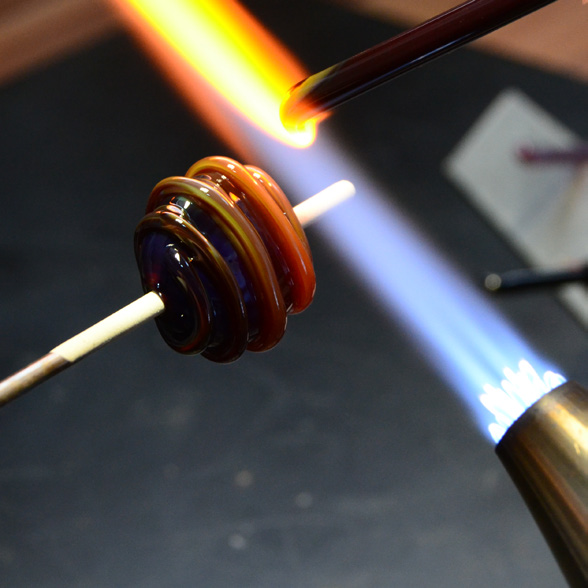
Rice. 7
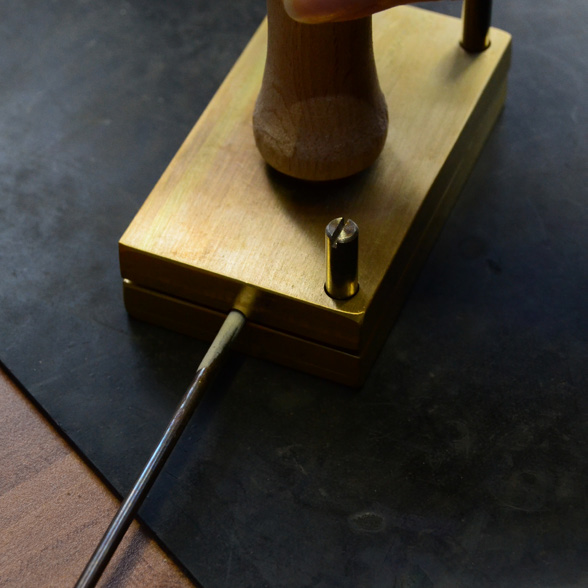
Rice. 8
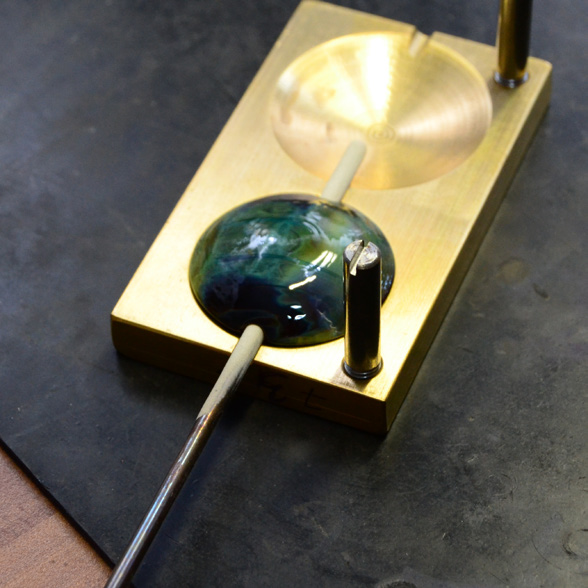
Rice. 9
Once the desired shape is achieved, polish the bead to smooth out press marks on the glass. Polish by briefly introducing the bead into the back of the flame, alternately with each side. Be careful not to let the glass get too hot. Excessive heat may distort the bead (Figure 10-12).
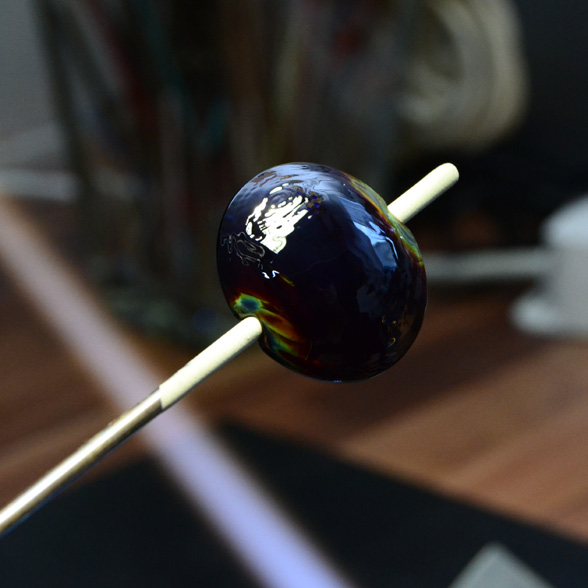
Rice. 10
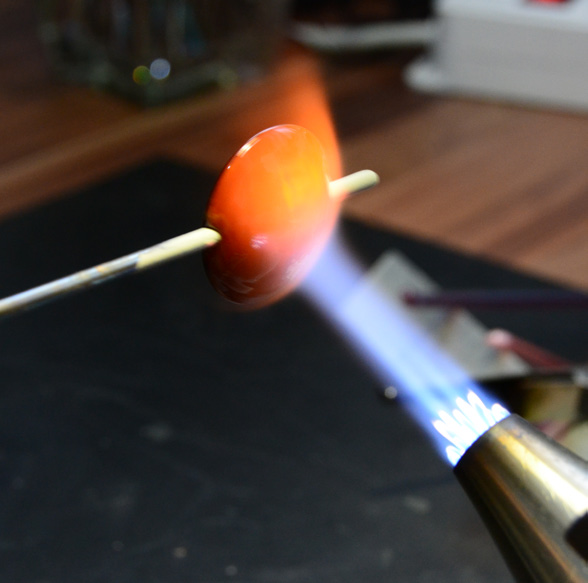
Rice. 11
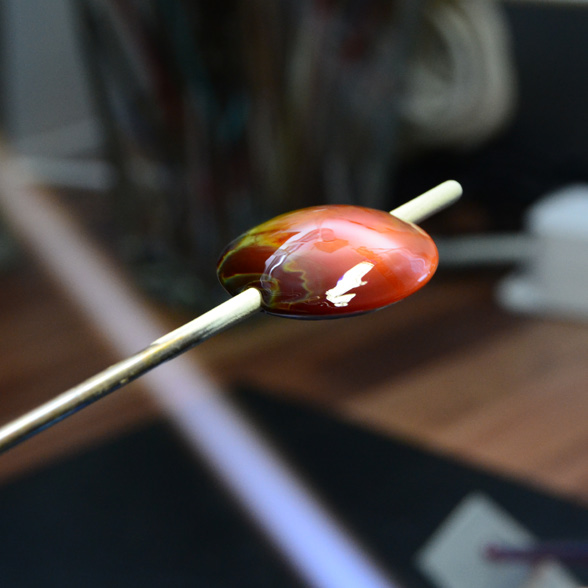
Rice. 12
We send the finished bead for firing in a muffle furnace (Fig. 13).
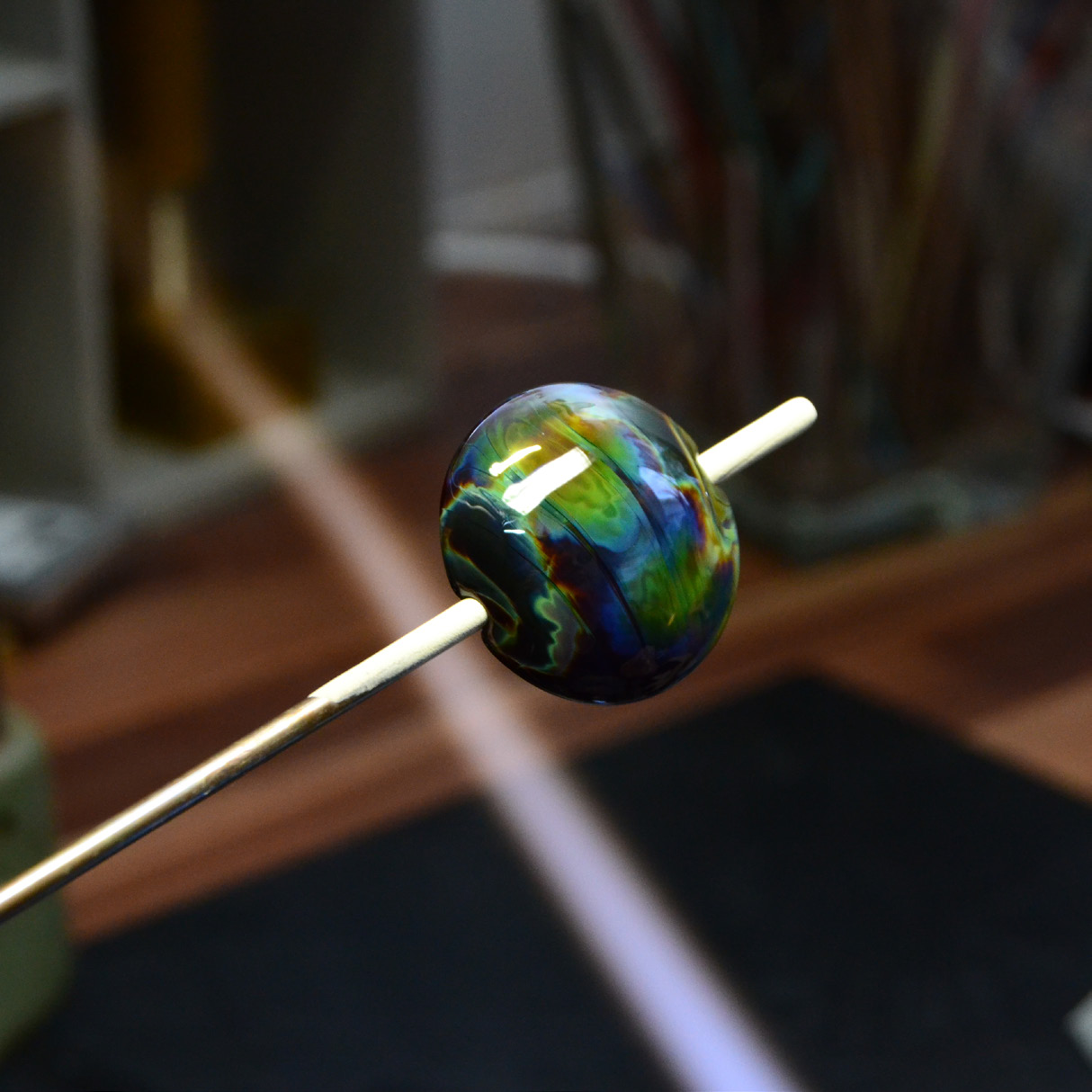
Rice. 13
We recommend that you gain experience working with a press with plain glass. Add glass gradually, each time warming the top layer of the bead before placing it in the press. Remember to heat the bead at the back of the flame before placing it in the oven, as… pressing cools the glass greatly.
If you have any additions or questions, we will be glad to see your comments below under the article or on our pages on social networks facebook And VKontakte.
The manual is taken from the website www.perlenpresse.de. We express special gratitude to the author of the manual, Oleksandr Borisovich Ornes, for his cooperation.